The Siren That Learned to Whisper: Alarm Governance as a Safety Case in UK Pathology Cold Storage
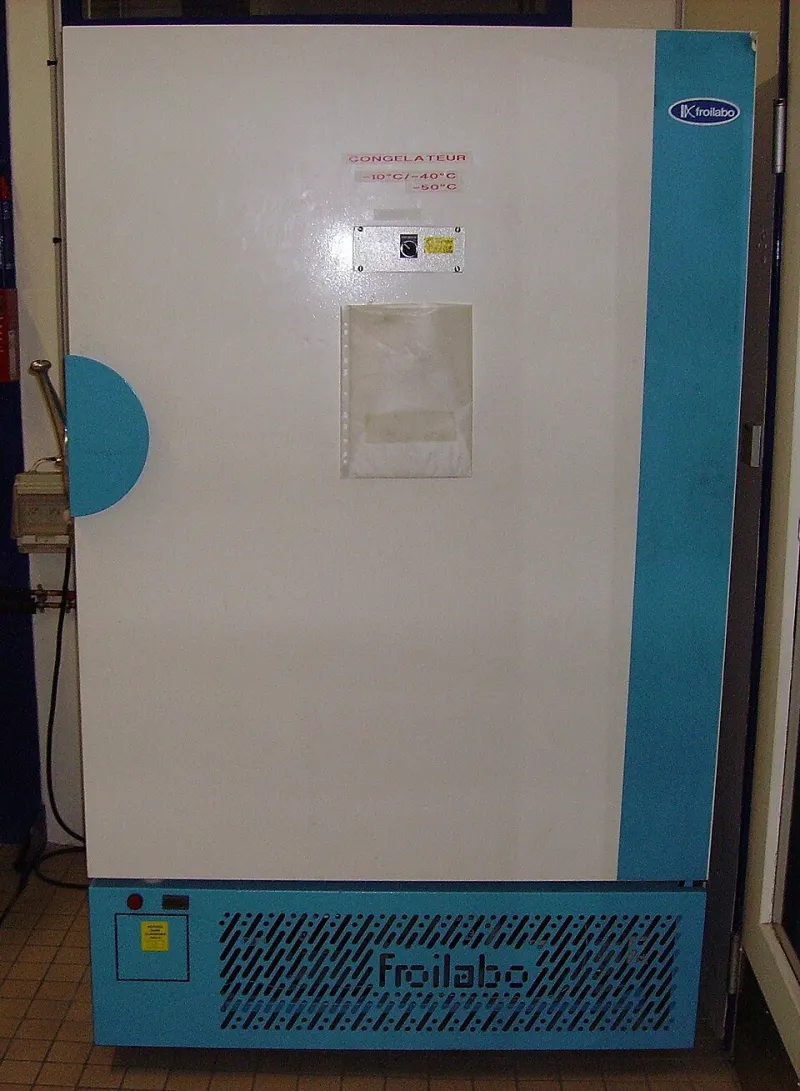
Photo: Cjp24, CC BY-SA 3.0, via Wikimedia Commons
In a busy UK pathology laboratory, a networked temperature monitoring system can generate dozens of alerts before lunchtime. A door left open during a stock check, a defrost cycle, a brief spike after a power restoration, a sensor that drifts by half a degree: each may be technically true, and each may be clinically irrelevant. The danger is not that the system is silent. The danger is that it is too loud to hear.
Cold-chain assurance is often framed as a procurement question: which sensor, which logger, which software platform. That framing is necessary but insufficient. A freezer failure is not prevented by a specification sheet. It is prevented by a person who recognises the alarm, knows what it means, has the authority to act and can reach the right equipment at the right time. That is a behavioural safety case, and it deserves the same scrutiny as any diagnostic validation.
From sensor to signal
UK laboratories already work within a dense assurance landscape. UKAS accreditation to ISO 15189 places expectations on equipment monitoring, environmental conditions and incident review. MHRA requirements apply to devices placed on the market. NHS patient safety frameworks encourage organisations to learn from near misses, not only from harm. Yet temperature alarms frequently sit outside these conversations because they are treated as facilities infrastructure rather than as part of the diagnostic pathway.
That separation is a mistake. A failed freezer can compromise reagents, control material, research samples or biobank stocks. The consequences may surface days later as a quality control shift, an invalid run or a lost research cohort. By then, the alarm log is the only witness. If that log shows repeated alerts that were acknowledged but not acted upon, the laboratory has a governance problem that no sensor upgrade will solve.
The audit's four domains
An alarm-fatigue audit should begin with the alarm log, but it should not end there. The log describes what the system did. It does not describe what staff understood. A practical audit therefore covers four domains: thresholds, escalation, ownership and human factors.
1. Thresholds that match the material and the moment
A threshold is a clinical decision disguised as a technical setting. For 2–8°C reagent storage, a short excursion during a door opening may be acceptable; for a validated assay component, it may not. For -80°C freezer stock, the acceptable recovery time and the tolerable rise are different again. The audit should ask whether each threshold was set from a documented stability rationale or inherited from a default configuration.
Alarm delays and hysteresis matter as much as the set point. A system that alarms immediately on every door opening will train staff to dismiss the first alert as routine. A system that waits too long may miss a genuine failure. The right balance depends on the material, the door-use pattern and the thermal mass of the unit. It should be reviewed when storage arrangements change, not only when the monitoring contract is renewed.
2. Escalation routes with a named owner
Many laboratories can describe their escalation policy. Fewer can demonstrate that it works at 03:00 on a bank holiday. The audit should trace a simulated alarm from detection to resolution, including the primary contact, the backup contact, the duty manager and the estates or facilities team. It should confirm that the route does not depend on a single mobile number or a shared inbox that nobody monitors out of hours.
Escalation should also distinguish between alarm types. A door-open alert during normal working hours is not the same event as a compressor failure overnight. If both arrive as the same text message, staff will prioritise by intuition rather than by protocol. The audit should test whether the system can classify severity and route accordingly.
3. Out-of-hours ownership and authority
Ownership is more than a name on a rota. It includes the authority to move samples, switch to a backup freezer, authorise a temporary storage arrangement and contact a supplier. In too many organisations, the on-call Biomedical Scientist can detect a problem but cannot resolve it without a chain of permissions that adds hours.
The audit should ask who can authorise an emergency transfer, where the backup capacity is, how access is gained and whether the receiving unit has been pre-cooled and monitored. It should also confirm that the out-of-hours contact list is current. A stale escalation list is a latent failure mode, and it is invisible until the night it matters.
4. Human-factors testing before go-live
A monitoring system is a user interface before it is a safety device. Human-factors testing should ask whether the alarm is audible above centrifuge noise, visible on the screens staff actually use and distinguishable from other alerts. It should test the acknowledgment workflow under realistic conditions: a busy shift, a glove-covered hand, a shared computer, a colleague asking a question at the same time.
Alarm floods deserve particular attention. After a power restoration or a network outage, the system may deliver a burst of queued alerts. Staff then face a choice between addressing the oldest message and addressing the most urgent one. The interface should make that choice obvious. If it does not, the audit should recommend a design change, not a training slide.
What to measure
A useful audit produces numbers that inform action. The alarm-to-action ratio is a starting point: how many alerts were generated, and how many led to a documented intervention? A low ratio suggests nuisance alarms; a high ratio may suggest under-recording. Time to acknowledge, time to reach the unit and time to resolution should be measured separately, because they expose different bottlenecks.
Repeat alarms are especially revealing. A freezer that alarms every week for the same reason is not a monitoring success; it is a maintenance backlog with a notification habit. The audit should also review near misses, including events where staff intervened before sample loss. Those events are free lessons, but only if they are captured.
Governance after the audit
The output should be a short, owned action plan: threshold changes with a stability rationale, escalation routes tested out of hours, named authorities for emergency transfer, human-factors fixes and a schedule for re-audit. The plan should sit within the laboratory's quality management system and be visible to the patient safety team.
Cold-chain assurance is not a contest between sensitivity and specificity. It is a question of whether the organisation can hear, interpret and act on the signal it has created. When every alarm is urgent, none is. The laboratory that audits its alarms is not reducing its vigilance. It is making vigilance possible.