When the Supplier Email Is the Safety Event: IVD Field Actions in UK Laboratories

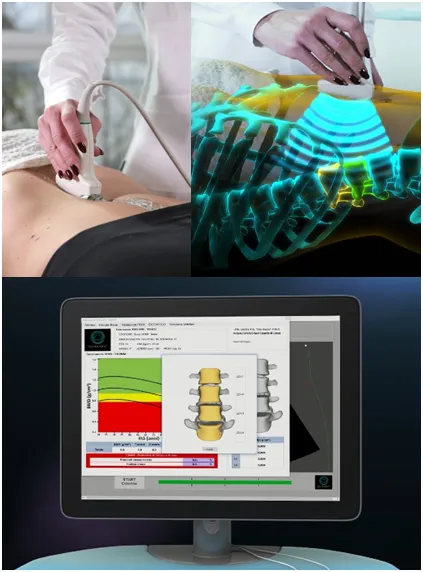
Photo: Cellular, Molecular and Biomedical Reports, CC BY-SA 4.0, via Wikimedia Commons
Field safety corrective actions for in vitro diagnostics rarely arrive with the urgency their name suggests. In many UK laboratories they surface as a PDF attached to a supplier bulletin, a portal notification, or an email forwarded by procurement. The text is dense, the scope may be a single lot, a software version, a pack size, or an instrument configuration, and the clinical consequence is not always immediately clear. Yet the effect can be a change in diagnostic performance that no one has formally assessed.
That is the quiet risk. A field safety notice (FSN) is not simply correspondence. It is a post-market signal that a device may not meet its performance or safety requirements, and that the manufacturer has taken or intends to take corrective action. Some notices require quarantine and return. Others require a software update, additional quality control, revised instructions, or enhanced monitoring. Some require no local action beyond acknowledgement. The laboratory's task is to decide which, and to leave evidence for that decision.
Why a forwarded PDF is a quality event
An unread FSN is an uncontrolled change. Even when the conclusion is that no action is needed, the reasoning should be recorded. Under a quality management system aligned with ISO 15189, laboratories are expected to manage change, control documents and records, and review incidents and adverse events. A supplier notice that alters reagent use, instrument settings, quality control frequency, or result interpretation sits squarely within that framework.
The practical problem is fragmentation. In 2026, a notice may reach a trust through a regional procurement hub, a manufacturer's customer portal, a distributor, or a point-of-care coordinator. One site may receive it; another may not. A laboratory might hold affected stock in a central store, a satellite laboratory, a ward cupboard, or a research fridge. The notice may name a product code that means little to the bench without the local catalogue mapping. Treating the email as an inbox chore is therefore not a minor administrative failing. It is a gap in post-market surveillance at the point where the device is actually used.
Triage: the first 24 hours
A workable triage does not require a large committee. It requires a named owner and a small group able to answer five questions quickly. What exactly is affected? What is the stated hazard or performance concern? What action does the manufacturer require, and by when? What is our local exposure, including stock, lots, software versions, and sites? What evidence will allow us to close the action?
The first checks are practical. Quarantine stock if the notice requires it. Search inventory and purchasing records. Check the laboratory information system or middleware for lot numbers and release dates. Ask whether results have already been reported from affected material. For point-of-care devices, confirm which wards or clinics hold the device and who controls updates. For software, establish whether the affected version is live, pending, or has been superseded.
The clinical question should follow swiftly. If the notice concerns reduced sensitivity, possible false negatives, or a calibration shift, the laboratory needs a view on results already issued. That may mean reviewing quality control, external quality assessment performance, and the clinical context of recent reports. Not every notice requires a patient lookback, but the decision to undertake one, or not, should be deliberate and documented.
Documenting the decision, not just the notice
A field safety log is useful, but only if it records the local response rather than merely the arrival of a PDF. For each notice, record the manufacturer, product, affected lot or version, date received, triage owner, risk assessment, actions taken, communication issued, verification evidence, and closure date. Link the entry to the change control or corrective and preventive action system where appropriate.
Distinguish acknowledgement from action. A supplier may ask for confirmation that the notice has been received. That is not the same as confirming that affected stock has been removed, that the software has been updated, or that results have been reviewed. If no local action is required, state why: the product is not in use, the lot was never received, the software version was not deployed, or the stated risk does not apply to the local configuration. A negative decision with a reason is stronger than silence.
Communication that reaches the bench
A notice that stops with the quality manager has not been communicated. Bench staff need to know what to stop using, what to check, and what to record. Biomedical scientists, clinical scientists, and point-of-care coordinators may need a short briefing at handover. Ward teams may need a clearer instruction if a device or reagent is in clinical use. The message should identify a named contact and a route for questions.
Tone matters. An over-alarmist message can cause unnecessary stock destruction or result withholding. An under-stated message can leave affected material in use. The safest approach is specific: state what is known, what is not known, what has changed locally, and what staff should do next. Where patient review is required, say so plainly and explain how cases will be selected.
Verification: close the loop with evidence
Verification is the step that turns a notice into an auditable action. Evidence might include a quarantine record, a stock reconciliation, a software update confirmation, a quality control run after a reagent change, a review of affected results, or a signed statement that no local exposure existed. If a lookback was performed, record the selection criteria and the outcome. If no lookback was needed, record the rationale.
Timeliness is also worth measuring. How long did it take from receipt to triage? From triage to action? From action to closure? A simple quarterly review can reveal whether notices are reaching the right person, whether supplier contact details are current, and whether certain product groups generate repeated issues. This is post-market surveillance as an active laboratory process, not a retrospective paper exercise.
A small governance routine
The aim is not to duplicate the regulator's work or to second-guess the manufacturer. It is to make the local response visible. A named quality contact for supplier communications, a deputy, a single log, a short triage template, and a quarterly review are modest additions. Contracts and supplier agreements can reinforce them by requiring safety notices to be sent to a named laboratory contact rather than a generic inbox.
For UK laboratories, the silent field safety notice is a useful test of the quality system. If a notice can arrive, be triaged, be acted on, and be closed with evidence, the laboratory has demonstrated control over a change that might otherwise have passed unnoticed. That is the bench-to-bedside discipline in miniature: not a dramatic recall, but a documented decision made before diagnostic performance is affected.