When the Bench Changes Hands: A Handover Standard for 24/7 UK Pathology
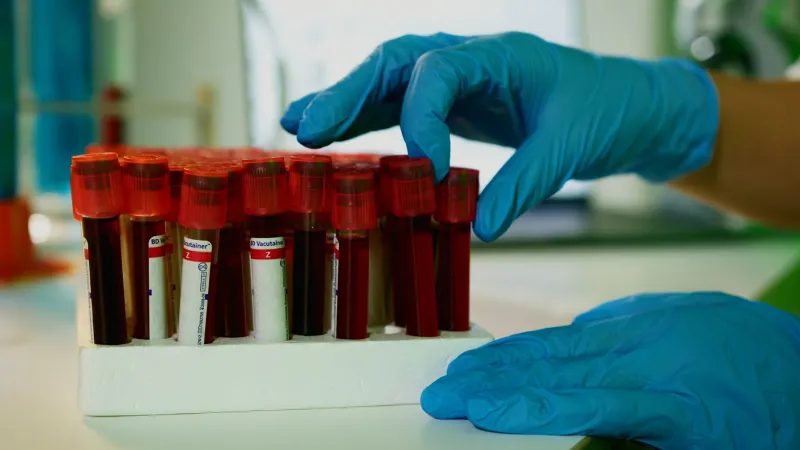
At 21:55 on a Tuesday, the outgoing biomedical scientist has ten minutes to explain what the next shift needs to know. There is a pending add-on for a renal profile, a discrepancy between a previous and current potassium, a sample flagged for repeat analysis after haemolysis, and a call from a ward about a result that has not yet been authorised. Some of this will be said aloud. Some will be remembered. Some will not.
Shift handover in NHS pathology is often treated as a conversation rather than a controlled process. It happens at the bench, beside an analyser, or in the few minutes before the door closes. That informality is understandable. Laboratories are busy, staffing is stretched, and no one wants another meeting. But the ten minutes between shifts is not an administrative gap. It is a clinical transition, and it deserves the same discipline as any other step that can change a diagnosis.
A clinical transition disguised as a chat
The risk is not that staff are careless. It is that handover relies on memory, narrative and local custom. Pending work is easily compressed into 'a few add-ons' without naming the sample, the test or the deadline. An unresolved discrepancy may be mentioned once and then lost when the incoming scientist is pulled into a separate query. A sample described as 'watch this one' carries no defined action, owner or review time. The phrase sounds cautious but functions as a note to self rather than a shared instruction.
Out-of-hours cover magnifies the problem. Weekend and night shifts often involve fewer staff, cross-site working and reduced access to senior scientific advice. A sample that would have been discussed with a colleague at 14:00 may need an escalation decision at 02:00. If the handover record does not distinguish between routine pending work and time-critical follow-up, the incoming shift has to reconstruct priority from fragments.
Why weekends expose the weak points
Weekend working removes the informal redundancy of a full laboratory. There are fewer people to overhear a query, fewer opportunities to ask a second opinion and less slack when an analyser fails. Transport schedules differ, some reference laboratories run reduced services, and clinical teams may be covering unfamiliar wards. In that environment, a verbal handover that depends on the outgoing scientist being available for a follow-up call is fragile.
The same applies to bank holidays and winter pressures. As demand rises in late 2026, the temptation is to shorten handover to protect throughput. That is precisely when a structured record matters most. A short, standardised handover is not a brake on flow. It is a way to prevent the next shift from rediscovering work that has already been started.
What a structured handover should contain
Structured handover does not require a new meeting. It requires a single place where outstanding work is visible, owned and time-bound. In most laboratories this can be a one-page ledger, either paper or a controlled digital form. The key is that it is completed continuously through the shift, not reconstructed at the end.
The ledger should capture five things for every open item: what the issue is, what has been done, what happens next, who owns it, and when it must be reviewed or escalated. Safety-critical results, discrepant results and sample-integrity concerns should be read back by the incoming shift. Routine pending work can be acknowledged rather than read aloud. That distinction keeps the ten minutes focused.
A practical template might use these headings:
| Handover area | What to record | Example prompt |
|---|---|---|
| Safety-critical follow-up | Result, action taken, read-back confirmation | Has the clinical team acknowledged the result? |
| Pending add-ons | Sample ID, test, requesting clinician, deadline | Which add-ons are due before 08:00? |
| Discrepancies | Previous result, current result, review status | Who is reviewing, and by when? |
| Sample integrity | Haemolysis, clotting, insufficient volume, repeat status | Is a repeat sample expected? |
| Quality control and analysers | QC failure, maintenance, function check, vendor reference | Is the analyser released for patient testing? |
| Reagents and consumables | Stock level, lot change, expiry, replacement status | Will the next shift run out? |
| Clinical queries | Caller, ward or GP practice, query, response | Is a callback outstanding? |
| Escalation and staffing | On-call contact, site cover, unresolved capacity issue | Who decides if demand exceeds capacity? |
Making it fit the ten minutes
The template only works if it is part of the shift, not an additional task at the end. The outgoing scientist should update the ledger as issues arise. The incoming scientist should confirm each safety-critical item and accept ownership of the rest. Anything without an owner should be escalated before the outgoing shift leaves. That final check is the handover.
Laboratories should also agree what 'closed' means. A pending add-on is not closed because it has been mentioned. It is closed when the result is authorised, the query is answered, or the item has been formally transferred to another owner. That distinction prevents the same issue from circulating for days as a familiar phrase in the handover conversation.
Audit the process, not just the document
A handover ledger is a quality tool, not a compliance ornament. Under ISO 15189 and UKAS accreditation, laboratories are expected to control processes that affect examination quality. Handover sits within that expectation because it affects the continuity of examination, authorisation and clinical communication. The audit question is simple: can a scientist joining the shift identify every open item that could affect a patient result within ten minutes?
Useful measures include the proportion of handovers with a completed ledger, the number of unowned items at shift change, overdue escalations, and repeat incidents linked to information not transferred. These are more informative than counting how many meetings were held. They also give laboratory managers a way to improve the process without blaming individuals for a system that relied on memory.
Digital tools can help, but a free-text messaging group is not a controlled handover record. If a laboratory uses an electronic log, it should be accessible to the incoming shift, time-stamped and subject to information governance. The aim is not to create more documentation. It is to make the ten minutes between shifts a reliable clinical transition, so that the next scientist inherits a clear picture rather than a partial one.