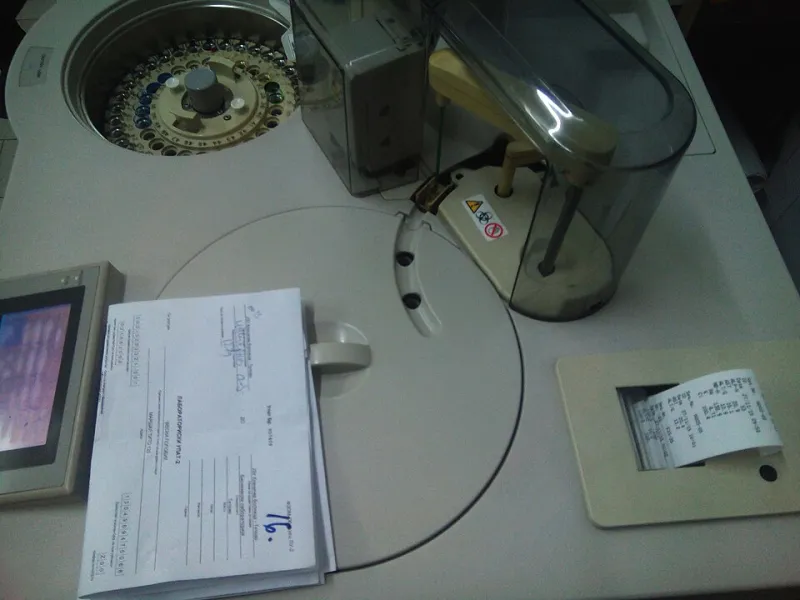
Version Control for Susceptibility: Making Breakpoint Updates Visible in UK Laboratories
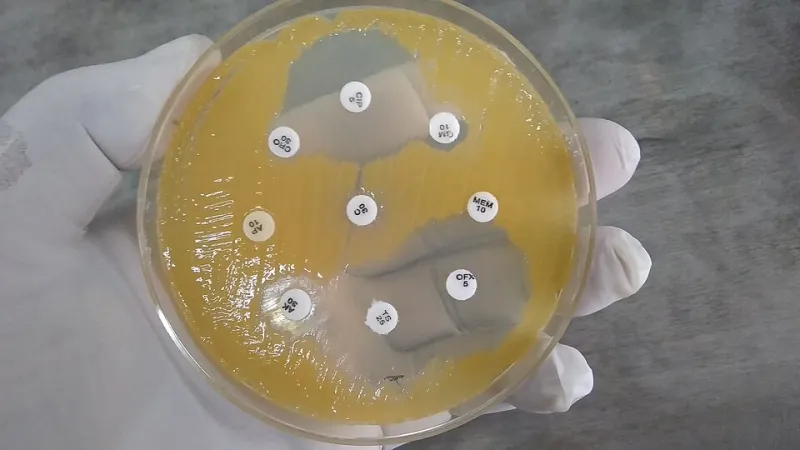
Photo: Ajay Kumar Chaurasiya, CC BY-SA 4.0, via Wikimedia Commons
Breakpoint creep is less a laboratory inconvenience than a slow redistribution of clinical meaning. The organism has not changed. The minimum inhibitory concentration has not changed. But the category reported to the clinician has, and with it the likelihood that a patient receives one antimicrobial rather than another. When that shift happens quietly, the laboratory may believe it has completed an annual update while the clinical system has absorbed a change it does not fully understand.
In the UK, most clinical laboratories align with EUCAST, although CLSI remains relevant for some organisms, methods and specialist services. Each annual revision can alter clinical breakpoints, pharmacokinetic and pharmacodynamic categories, screening cut-offs and expert rules. The technical work is substantial, but the patient-safety risk lies in the gaps: the old breakpoint embedded in a local rule, the automated system software that has not been updated, the report comment that still refers to a superseded category, the stewardship guideline that has not been reconciled.
Why breakpoint creep is a safety issue
A breakpoint is not a property of the organism alone. It is a decision threshold that links a laboratory result to a clinical action. When a breakpoint changes, the same MIC can move from susceptible to susceptible, increased exposure, or from susceptible, increased exposure to resistant. The laboratory report may look internally consistent, but the clinician may be seeing a category that no longer maps onto the local treatment guideline.
Cascade or selective reporting amplifies the effect. A laboratory may suppress certain antimicrobial results to steer prescribing, but the suppression rules are built around breakpoint categories. If the underlying breakpoint changes and the cascade logic does not, the laboratory can suppress a result that should have been reported or release one that should have been withheld. Antimicrobial stewardship teams may then work from an antibiogram that no longer reflects the current interpretive standard.
Map every place a breakpoint lives
Before changing anything, the laboratory should map every location where a breakpoint or its associated rule is stored. The visible locations are the susceptibility test method, the automated system software, the disc diffusion chart and the laboratory information system. The less visible locations include validation scripts, report comments, cumulative antibiogram code, cascade reporting tables, quality control acceptance criteria, external quality assessment submissions, standard operating procedures, training slides and stewardship guidance.
This mapping should be treated as a controlled document. It should identify the owner of each location, the version currently in use, the date of the last review and the change mechanism. Without that map, the annual update becomes a series of local fixes rather than a coordinated change. The laboratory may update the automated system and still leave a legacy rule in the LIS that silently overrides the new category.
Treat the update as a controlled change, not an annual chore
The update should follow the same governance as any change that affects reported results. That means an impact assessment, a validation plan, a version-controlled build, an effective date, a communication plan and a post-implementation audit. The impact assessment should identify which organisms, antimicrobials, specimen types and reporting rules are affected, and which clinical specialties are most likely to notice the change.
Validation should not stop at the analyser. It should include the LIS report, the cascade logic, the comment library and the cumulative antibiogram. Where the automated system uses a software version with updated breakpoints, the laboratory should verify that the version installed is the version approved and that the interpretation matches the method in use. Disc diffusion zones should be checked against the current chart, and any local exceptions should be documented with a rationale.
Make the effective date visible
A breakpoint update without a visible effective date is difficult to audit. The laboratory should publish a change notice that states the revision, the organisms and antimicrobials affected, the old and new categories, the effective date and the action required by service users. The notice should be sent to clinical teams, stewardship pharmacists, infection specialists and anyone who receives susceptibility reports.
A dual-reporting period can be useful for high-impact changes, but it should be deliberate rather than indefinite. During that period, the laboratory may report the new category with a comment explaining the change, or provide a comparison for selected organisms. The aim is not to confuse the clinician with two answers, but to make the transition visible and to allow local guidance to be updated.
Communication with clinicians and stewardship teams
Clinicians do not need a lecture on breakpoint methodology. They need to know which organisms and antimicrobials have changed, what the change means for treatment, and where to find the updated guidance. A short change notice with worked examples is more useful than a long technical appendix. Stewardship teams should receive the same notice early enough to update local guidelines, formulary advice and audit tools.
The laboratory should also review its report comments. A comment that says a result is resistant according to a previous revision, or that refers to a category no longer in use, undermines confidence in the report. Comments should be version-controlled alongside the breakpoint tables and reviewed whenever the interpretive standard changes.
Audit trails that survive inspection
The audit trail should show who approved the change, what was validated, when the change went live and how the laboratory confirmed that it had been implemented. Training records should demonstrate that reporting staff understood the change. Post-implementation audits should check a sample of reports against the new breakpoints, review cascade reporting decisions and confirm that the cumulative antibiogram has been rebuilt from the correct version.
A useful checklist includes the following: confirm the current EUCAST or CLSI revision and its scope; identify all affected organisms and antimicrobials; map every LIS rule, comment and cascade table; update automated system software and disc diffusion charts; validate the end-to-end report; revise standard operating procedures and training materials; notify clinical and stewardship teams; set an effective date; monitor reports and queries after Go-live; and retain the change record for inspection.
Breakpoint updates are not invisible laboratory housekeeping. They change what a result means. The laboratory that makes the change visible, controlled and auditable is not adding bureaucracy to the annual update. It is protecting the clinical decision that depends on it.