What Flows Before the Sample: A Water-Quality Assurance Framework for UK Clinical Laboratories
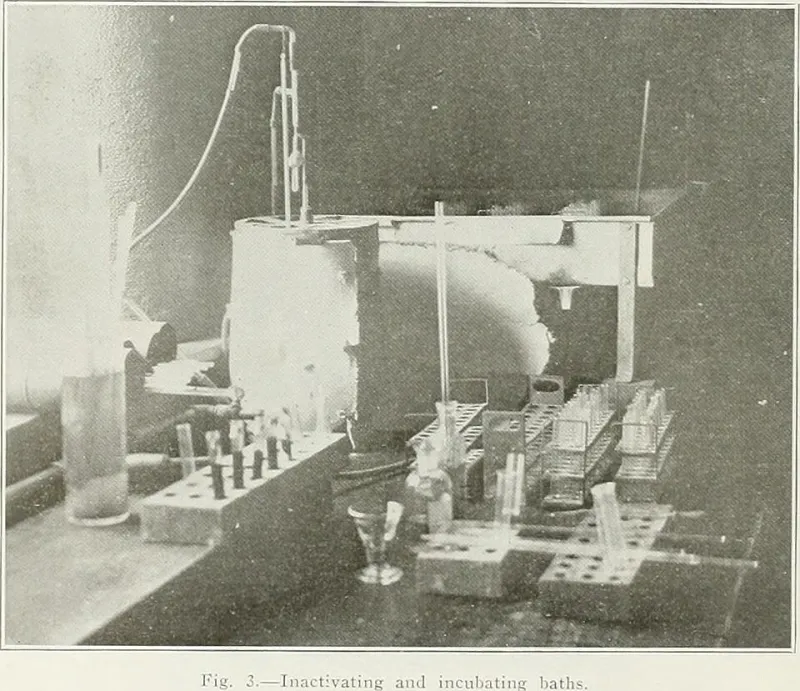
Photo: Internet Archive Book Images, No restrictions, via Wikimedia Commons
Water is rarely the first thing a laboratory scientist thinks about when a control drifts, a blank rises or a molecular assay becomes less efficient. It is, however, the largest reagent by volume in many diagnostic workflows. It dilutes, dissolves, rinses, feeds analysers and prepares media. It also sits at the boundary between estates engineering and laboratory quality management, which is precisely where assurance can become thin.
For UK clinical laboratories preparing 2026 validation schedules, the case for making water quality visible is straightforward. A water system is not a passive utility. It is an analytical input with its own failure modes, maintenance history and performance drift. When those factors are absent from quality review, laboratories are left interpreting assay signals without knowing what flowed before the sample.
The largest reagent is often the least examined
In biochemistry, water quality can influence reagent reconstitution, probe washing, cuvette hygiene and the baseline behaviour of ion-sensitive assays. In microbiology, it affects media preparation, staining, suspension fluids and the reliability of environmental sampling. In molecular diagnostics, water is used in extraction, master mixes and no-template controls; residual nucleases, inhibitors or microbial contamination can matter at concentrations that are irrelevant to other users.
The difficulty is that water quality is usually described by a specification rather than a clinical risk assessment. A laboratory may know that its system is designed to produce a particular grade of water, but that does not confirm that the grade is maintained at every use point, through every weekend, and after every sanitisation. Nor does it show whether a change in feed water or a replaced filter cartridge coincided with a shift in assay performance.
How water shifts results quietly
Biofilm is one of the more persistent risks. It can establish in pipework, valves, storage tanks and dead legs, particularly where flow is intermittent. Once present, biofilm can shed material, harbour organisms and protect them from disinfection. A system that meets a conductivity specification can still deliver water with a microbial or organic burden that affects sensitive methods.
Feed-water changes also deserve attention. Seasonal variation, local supply changes, temporary treatment work or a switch in supply route can alter the incoming water chemistry. A laboratory may not receive a dramatic warning; it may simply see a gradual change in conductivity, organic carbon or disinfectant demand. If the water system is not trended, the first visible sign may be a drift in assay blank values or a change in media performance.
Filter exhaustion is equally undramatic. Cartridges, UV lamps, reverse-osmosis membranes and polishing packs have finite lives, and their performance can decline before a scheduled replacement. Maintenance windows add another variable. Sanitisation can leave residuals; stagnant periods can encourage biofilm; a filter change without adequate flushing can introduce particulates or air. None of these events is unusual, but each should be linked to the laboratory's change-control and quality-review processes.
A governance gap, not just an engineering issue
In many UK trusts, the water purification system is maintained by estates or a specialist contractor, while the laboratory manages analytical quality under UKAS accreditation. That division is practical, but it can leave a gap. The laboratory may hold the assay data; the contractor may hold the service records; neither may routinely compare them.
A more robust approach is to treat the water system as a critical reagent supplier. That means defining use points, acceptance criteria and monitoring responsibilities in the laboratory quality system. It also means including water in change control when feed-water sources, pipework, filters, sanitisation regimes or maintenance schedules alter. The question is not simply whether the system was serviced, but whether the laboratory can demonstrate that the water remained fit for its intended diagnostic use.
A practical water-quality assurance checklist
Before the next analyser validation, laboratories could use a short, documented review to connect system records, conductivity trends and assay performance. The following checklist is intentionally practical rather than exhaustive.
-
Map the system and its use points. Record where water is produced, stored, circulated and drawn off. Include analysers, media preparators, molecular workstations and manual wash stations. Identify dead legs, infrequently used taps and any point where flow is intermittent.
-
Assemble the record pack. Gather installation details, service reports, sanitisation records, filter and lamp replacement dates, feed-water reports and any contractor alerts. Confirm that records cover the period since the last analytical validation or significant assay change.
-
Trend conductivity and, where available, organic carbon. Look for step changes, gradual drift and unexplained excursions rather than single values. Compare use-point readings with the specification that matters for the assay, not only the specification at the purification unit.
-
Review microbial and endotoxin monitoring where relevant. Confirm sampling sites, frequency and recovery actions. Include distal points and areas with low turnover. A central system result alone may not represent the water used at the bench.
-
Check maintenance and stagnation risks. Review sanitisation residuals, weekend shutdowns, bank holidays and any period when flow was reduced. Note whether flushing was performed after filter changes or repairs.
-
Correlate water records with assay quality. Review blank values, calibration drift, control shifts, media growth performance, PCR inhibition and no-template control signals over the same period. A temporal association is not proof of causation, but it is a reason to investigate before validation.
-
Apply change control. Treat feed-water changes, filter batch changes, pipework alterations and revised sanitisation schedules as controlled events. Document the risk assessment and any additional monitoring.
-
Define acceptance criteria and escalation. State what constitutes an adverse trend, who reviews it and what happens if water quality is uncertain. The response should be proportionate: increased monitoring, repeat sampling, maintenance review or, where necessary, a pause before validation.
-
Include water in the validation protocol. Record the water system status at the time of validation, including recent maintenance and monitoring results. If the water system changes materially, assess whether the validation baseline remains valid.
Making the invisible input visible
Water quality is not a glamorous subject, and that is part of the problem. It rarely announces itself with a single dramatic failure. More often it appears as a slow change in a blank, a less efficient extraction, a puzzling control shift or a media batch that behaves differently from its predecessor.
For UK laboratories, the opportunity is to bring water into the same quality conversations as reagent lots, calibrators and analyser maintenance. A short annual review, a clear record pack and a trend review before validation would make the largest reagent in the laboratory visible. That is not an additional burden so much as a correction of perspective: the sample does not arrive alone. It arrives into a system, and the water is part of that system.