The Missing Leg: Making Reagent Receipt a Controlled Process in UK Pathology
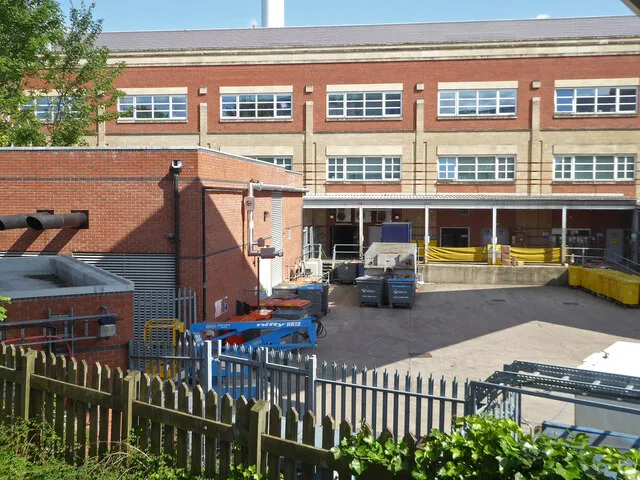
Photo: Chris Allen , CC BY-SA 2.0, via Wikimedia Commons
Reagent integrity is usually argued in two places. Upstream, manufacturers describe stability studies, validated shipping configurations and temperature-logging options. Downstream, the laboratory's own verification work demonstrates that a kit performs as intended on the analyser it was bought for. Between those two certainties sits an interval of indeterminate length — a pallet on a dock, a van on a ring road, a box on a trolley outside a fridge that is already full — and it is very often governed by nothing more than a signature on a delivery note.
That is not a criticism of individual laboratory staff, who are generally diligent about the things they have been given tools to be diligent about. It is a structural observation. Dispatch is a controlled process because a supplier's quality system makes it one. Analytical verification is a controlled process because accreditation makes it one. The last mile has no equivalent owner, and in the absence of an owner it defaults to whoever happens to be nearest the door.
Where the chain actually gives way
Ask a room of pathology staff where reagent problems originate and the answer is rarely the analyser. It is the dock. Pallets arrive in batches, and a delivery that lands at 08:40 may not be unpacked until the afternoon, because the person who signs for it is not the person who knows which items need to go cold. Summer loading bays and poorly ventilated goods-in areas are not controlled environments, and a shrink-wrapped carton sitting on a concrete floor for six hours is not the same object that left the supplier's validated packing line.
Out-of-hours receipt introduces a second set of compromises. A weekend or night delivery may be accepted by security or portering staff with no access to the laboratory's storage and no briefing on which cartons are cold-chain. The parcel is then placed wherever is convenient and moved later. The same applies to shared fridges, where reagents sit alongside specimens, controls or staff lunches, and to the familiar problem of the fridge that is full: a box left out while somebody finds space is, functionally, an unmonitored excursion.
Subcontractor handoffs add a further gap. A supplier's validated shipping configuration assumes a chain of custody that may pass through two or three couriers, none of whom is obliged to report a delay, a re-sorted van or a period on a warm bay. The temperature logger, where one exists, records the journey but not the interpretation; a logger read after the fact tells you something happened, not what to do about it.
What 'controlled' would actually mean
A controlled receipt process does not require a validated cold room at every hospital entrance. It requires that four things are known, recorded and owned: when the consignment arrived, what condition it was in, where it went and when, and who accepted responsibility at each step.
In practice, that translates into a short and unglamorous list. A named receiver, trained for the task, rather than whichever member of staff is closest to the door. A recorded arrival time and a recorded time to correct storage, both captured routinely rather than reconstructed after an incident. A visual inspection that means something: seal integrity, crush damage, condensation, ice presence in an ambient pack, and the state of any included indicator. And a defined route to storage that does not depend on the fridge having space at that moment.
Where suppliers provide temperature loggers or indicators, the laboratory should know in advance what it will do with the data. A logger that is downloaded only when someone remembers is a decoration. A logger whose output is reviewed against a written excursion rule, with the review recorded, is evidence.
Decision rules, not improvisation
Temperature excursions are where informality is most costly, because the intuitive responses — discard everything, or use it anyway because the delivery is urgent — are both wrong often enough to matter. A laboratory needs a decision rule agreed in advance, ideally written with the supplier's stability data in hand.
A workable rule has three bands. Within the validated range and duration: accept, record, proceed. A modest excursion of known duration: accept into quarantine, notify the supplier, obtain a written disposition, and record the assessment even where the answer is to use the material. A substantial excursion, or one of unknown duration: do not release to the analyser, and treat the consignment as an investigation rather than a delivery.
The judgement is rarely about a single temperature reading. It is about accumulated thermal load across the whole journey, and this is where suppliers can help by providing stability data expressed as a time-and-temperature allowance rather than a single threshold. Laboratories that ask for this at tender stage tend to find the subsequent conversations much shorter.
The audit trail that survives scrutiny
Accreditation assessors are not usually looking for perfection; they are looking for a system that knows its own weaknesses. A receipt process that records arrival time, storage time, condition on receipt, excursion decisions and supplier dispositions gives an assessor something to test. A process that produces only a signed delivery note gives them nothing, which is itself a finding waiting to be written.
The evidence base is modest: a receipt log, logger downloads where available, deviation records with the reasoning attached, and periodic review of supplier performance against those records. The last of these is the one most often skipped and the one most likely to change behaviour. A quarterly summary of late deliveries, damaged cartons and excursions, shared with procurement, converts a series of local irritations into a commercial signal.
A modest place to begin
Before the next delivery arrives, it is worth spending a week simply observing the current process, from the moment the van pulls in to the moment the reagent reaches the analyser. Record the times. Note who touches the box. Note where it waits. Most laboratories that do this find at least one interval longer than they expected and one handoff that has no owner at all.
Fix those two things first. Add a named receiver, a timestamped route to storage, and a written excursion rule. None of it requires capital funding, and all of it converts an unexamined leg of the journey into something the laboratory can describe, defend and improve.